Our Homeowner's Guide to Driveway Sealcoating
Your driveway in Buffalo & Western NY is one of the first things people notice about your home. Beyond curb appeal, it's also one of your property's largest exterior investments. Like your roof, siding, or deck, asphalt requires routine maintenance to stay in good condition and deliver the longest possible service life.
Unfortunately, many homeowners don't think about their driveway until cracks begin to appear or sections start to deteriorate. By that point, repairs become more expensive and replacement may be closer than expected.
Regular driveway sealcoating is one of the simplest and most cost-effective ways to protect asphalt from the elements while extending its lifespan.
In this guide, we'll explain what driveway sealcoating is, why it's important, how often it should be done, what to expect during the process, and how homeowners throughout Buffalo and Western New York can get the most from their asphalt investment.
Our Complete Sealcoating Guide
What Is Driveway Sealcoating?
Driveway sealcoating is the process of applying a protective coating over existing asphalt pavement. Once cured, the coating forms a barrier that helps shield the asphalt from moisture, ultraviolet (UV) rays, automotive fluids, oxidation, and everyday wear.
It's important to understand what sealcoating does - and what it doesn't do.
Sealcoating is preventative maintenance, not structural repair.
A quality sealcoat can:
- Protect asphalt from weather and oxidation
- Slow surface deterioration
- Improve resistance to water and chemicals
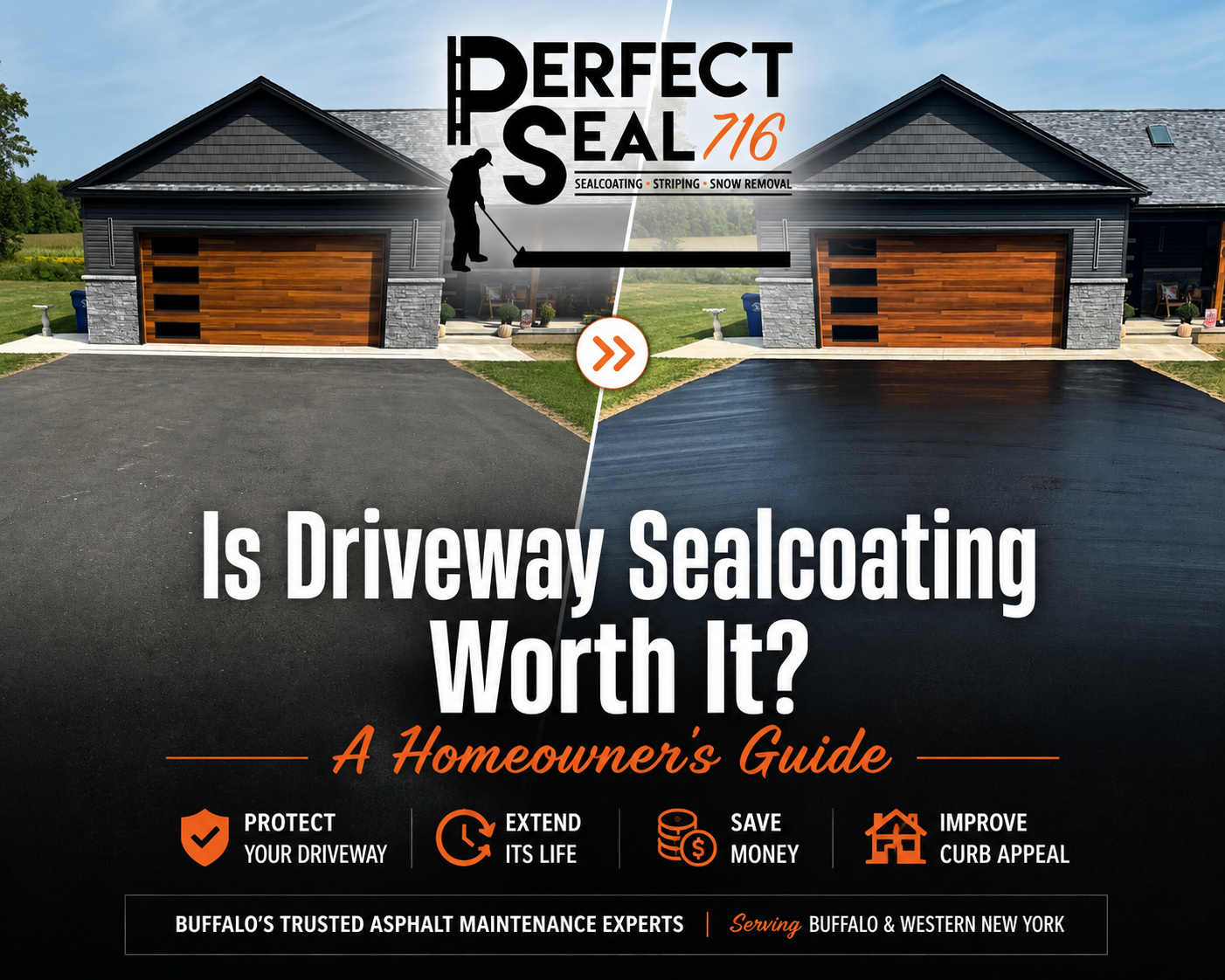
- Restore a rich black appearance
- Extend the life of the pavement
- Improve curb appeal
However, sealcoating is not designed to repair major damage. Large cracks, potholes, or structural failures should be addressed before a sealcoat is applied.
Why Asphalt Driveways Deteriorate
Many homeowners are surprised to learn that asphalt begins aging almost immediately after installation.
Several factors contribute to deterioration:
Sunlight and UV Exposure
Ultraviolet rays gradually dry out the oils that give asphalt its flexibility. As those oils diminish, the pavement becomes more brittle and susceptible to cracking.
Water Penetration
Water is one of asphalt's biggest enemies. Even small surface cracks allow moisture to reach the base beneath the pavement. During winter, freezing and thawing can cause those cracks to expand.
Freeze-Thaw Cycles
Western New York experiences frequent temperature swings during the winter months. Water expands when it freezes, placing tremendous stress on asphalt and accelerating crack formation.
Road Salt
Salt is essential for winter safety, but repeated exposure can contribute to the deterioration of asphalt surfaces over time, especially when combined with moisture.
Oil, Gasoline, and Automotive Fluids
Vehicle fluids can soften asphalt and gradually weaken the surface if left untreated.
Everyday Traffic
Even residential driveways experience continual stress from vehicles entering, parking, and turning. Over time, this normal use contributes to surface wear.
The Benefits of Driveway Sealcoating
Routine sealcoating offers both practical and financial advantages.
Extend the Life of Your Driveway
Preventative maintenance helps slow deterioration, allowing homeowners to get more years from their existing asphalt.
Improve Appearance
Freshly sealcoated asphalt has a rich, uniform finish that enhances curb appeal and gives the property a well-maintained appearance.
Protect Against Weather
Sealcoating helps reduce the impact of sunlight, moisture, snow, and seasonal weather changes.
Lower Long-Term Maintenance Costs
Addressing minor wear before it becomes major damage often helps reduce repair expenses over the life of the driveway.
Increase Property Value
While sealcoating alone won't dramatically increase home value, a well-maintained driveway contributes positively to a property's overall presentation.
Is Driveway Sealcoating Worth the Investment?
For most homeowners, the answer is yes.
Replacing an asphalt driveway represents a significant investment. Routine sealcoating costs only a small fraction of replacement while helping preserve the existing pavement.
Homeowners who invest in regular maintenance often enjoy:
- Longer pavement life
- Fewer major repairs
- Better curb appeal
- Lower lifetime ownership costs
How Often Should You Sealcoat?
There isn't a one-size-fits-all schedule because every driveway experiences different conditions.
Generally speaking:
- New asphalt should cure before receiving its first sealcoat.
- Most residential driveways benefit from resealing approximately every two to three years.
- Driveways with heavier traffic or greater weather exposure may require more frequent maintenance.
Rather than relying solely on a calendar, homeowners should monitor the condition of the pavement and schedule inspections as needed.
What Happens During the Sealcoating Process?
Professional sealcoating involves much more than simply spraying or brushing on a coating.
A quality installation typically includes:
1. Inspection
The driveway is evaluated for cracks, drainage concerns, and overall condition.
2. Surface Cleaning
Debris, dirt, vegetation, and loose material are removed to ensure proper adhesion.
3. Crack Filling
Existing cracks are repaired before the sealcoat is applied.
4. Surface Preparation
Edges are cleaned and the pavement is prepared for an even application.
5. Sealcoat Application
Professional-grade sealcoat is applied evenly across the surface.
6. Drying and Curing
The material is allowed to cure before vehicle traffic returns.
Proper preparation is one of the biggest differences between professional workmanship and lower-quality applications.
How Long Does Sealcoating Last?
Most professionally applied sealcoating lasts approximately two to three years under normal residential conditions.
Its lifespan depends on several factors:
- Traffic volume
- Weather exposure
- Drainage
- Surface preparation
- Material quality
- Proper application
- Ongoing maintenance
Routine inspections help determine when it's time for the next application.
Common Mistakes Homeowners Make
Many expensive asphalt repairs begin with avoidable maintenance mistakes.
Some of the most common include:
- Waiting until severe cracking develops
- Ignoring small cracks
- Hiring solely based on the lowest price
- Applying sealcoat over damaged pavement
- Driving on uncured sealcoat too soon
- Skipping routine maintenance altogether
Preventative care almost always costs less than corrective repairs.
DIY vs. Professional Sealcoating
Many home improvement stores sell driveway sealcoating products, leading some homeowners to consider a do-it-yourself approach.
DIY sealcoating may be suitable for small projects, but professional application typically offers several advantages:
- Commercial-grade materials
- Thorough surface preparation
- Professional crack repair
- Uniform application
- Proper equipment
- Greater efficiency
- Consistent results
For homeowners looking to maximize the life and appearance of their driveway, professional installation often delivers the best long-term value.
Choosing the Right Sealcoating Contractor
Not all contractors follow the same process.
Before hiring a company, homeowners should ask about:
- Experience
- Insurance
- Surface preparation methods
- Crack repair procedures
- Materials used
- References or customer reviews
- Written estimates
Choosing an experienced contractor helps ensure the work is completed properly from the beginning.
Frequently Asked Questions
How much does driveway sealcoating cost?
Costs vary depending on driveway size, condition, repairs needed, and other project factors. A professional estimate is the best way to determine pricing for your property.
How long before I can drive on a freshly sealed driveway?
Drying times vary based on weather conditions, but homeowners should always follow the contractor's recommendations before allowing vehicle traffic.
Does sealcoating fill cracks?
No. Existing cracks should generally be repaired before the sealcoat is applied.
What time of year is best for sealcoating?
Warmer weather provides the ideal conditions for proper curing.
Can older driveways still be sealcoated?
Many can, provided the pavement remains structurally sound. Severely deteriorated asphalt may require repairs before sealcoating.
Does sealcoating make a driveway waterproof?
Sealcoating helps reduce water penetration but should not be viewed as making asphalt completely waterproof.
Why Driveway Sealcoating Is Especially Important in Western New York
Homeowners throughout Buffalo and Western New York experience some of the most challenging weather conditions for asphalt.
Heavy snowfall, repeated freeze-thaw cycles, road salt, spring rain, and warm summer sun all contribute to pavement deterioration.
Because of these conditions, regular inspections and preventative maintenance are especially valuable in our region.
Maintaining your driveway before significant cracking develops can help extend its lifespan while preserving both its appearance and performance.
Protect Your Driveway Before Small Problems Become Big Ones
Sealcoating is one of the most effective ways to protect an asphalt driveway and maximize the life of your investment. While it isn't a substitute for proper repairs, it plays an important role in a comprehensive pavement maintenance plan.
Whether your driveway is beginning to fade, showing early signs of wear, or simply due for routine maintenance, taking action before problems worsen can help save money over the long term.
If you're unsure whether your driveway is ready for sealcoating or crack filling, the experienced team at Perfect Seal can evaluate its condition and recommend the most appropriate maintenance plan.
Contact Perfect Seal today for a free estimate and professional driveway sealcoating services throughout Buffalo and Western New York.

Schedule Your Seal Today!
Trust the family-owned team at Perfect Seal 716 LLC to handle all your sealcoating and crack-filling needs. Proudly serving Niagara County, Erie County, and surrounding areas, we’re committed to delivering top-notch results for projects big or small.
Contact us today to schedule a consultation or request a free estimate. Perfect Seal 716 LLC is where high-quality service meets attention to detail.
